
Lens replacement · Refractive lens exchange
Explore life with less dependence on readers.
Refractive lens exchange replaces the eye's natural lens. Understand the possible benefits, the risks and which lens choices may fit your vision before you decide.

What it actually is
RLE aims to reduce your dependence on glasses for reading, screens and distance vision. It replaces your eye's natural lens, the one that's been stiffening since your mid-40s, with a premium intraocular lens (IOL) chosen for your eye and your life. It's the same precise procedure as modern cataract surgery, done on your schedule instead of a cataract's.
Because the natural lens is what eventually clouds into a cataract, RLE means that conversation never has to happen. You correct your vision now and remove a future surgery from the table at the same time.
If reading glasses have arrived but a cataract diagnosis could still be 15 years away, you're in the gap LASIK can't fix and most practices ignore. RLE closes it now and can make you far less dependent on glasses across distance, computer, and reading. The lens you choose shapes that outcome, which is exactly why our founder co-founded VirtuaLens, the patented VR simulator that lets you preview each option before you commit.
We'll also talk openly about risk. The retinal-detachment risk is real and slightly higher in younger, more nearsighted eyes; we screen for it specifically and refer to a retina specialist when your eye calls for it. There's a neuroadaptation period, typically a few weeks to three months, while your brain learns the new lens. You should hear all of that before you decide, not after.
This is likely for you if
- You're in your late 40s, 50s, or early 60s and tired of progressives, readers, or monovision contacts.
- You want one solution for distance, computer, and reading, not a drawer full of glasses.
- You want this fixed once, not managed with a stronger prescription every couple of years.
This may not be for you if
- You expect flawless, glasses-free vision in every condition with zero trade-offs. Premium lenses are excellent, but night halos and a real adjustment period are part of the honest picture.
- You're a perfectionist about crisp natural near vision and under 55 with a mild prescription, for some people that's a trade worth thinking hard about. We'll walk through it with you, not around it.
Not sure where you land? That’s exactly what the consultation is for. We’ll give you a straight answer after a real exam.
Why this happened
Your eyes didn’t fail. The lens inside them just stiffened.
Around your mid-40s, the flexible lens you were born with starts to harden. Reading glasses don’t fix that. They work around it. RLE fixes the part that changed.
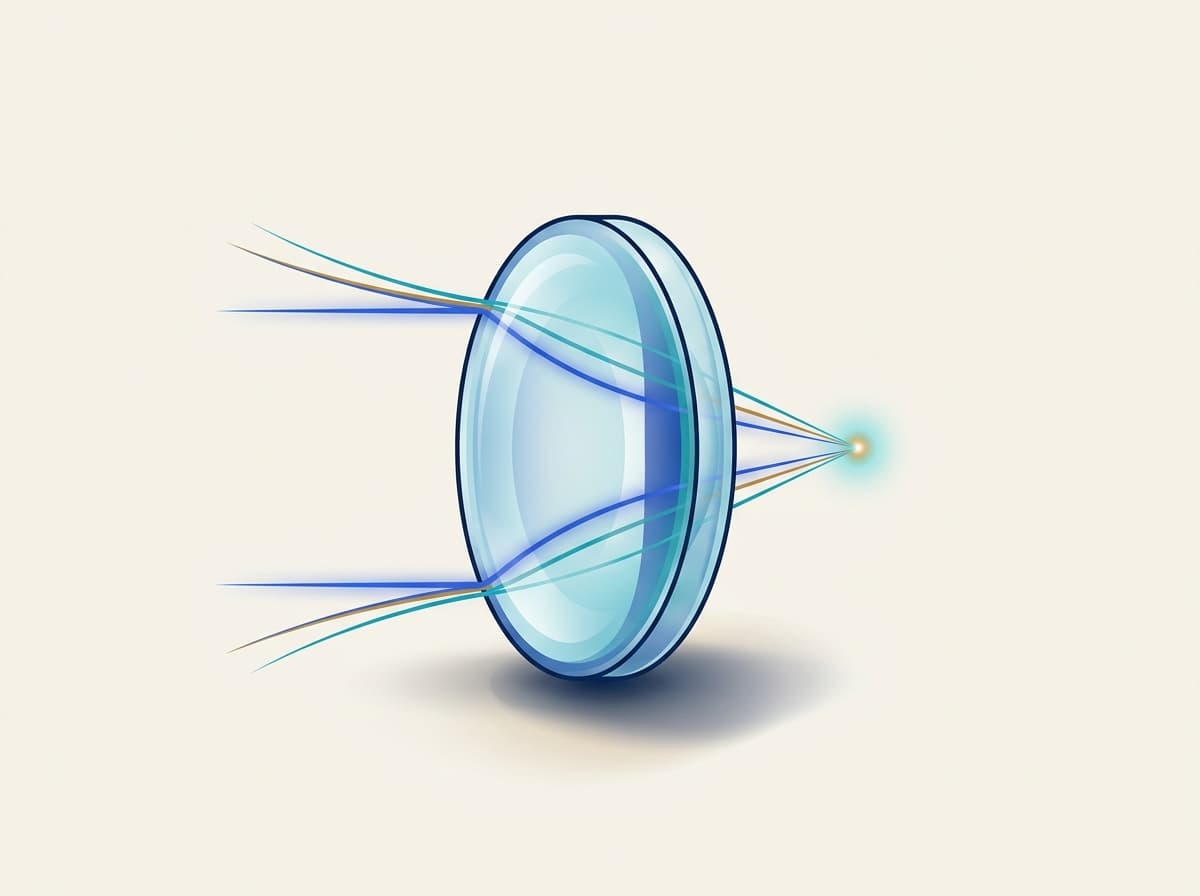
Soft and flexible. It changes shape on demand, bending light to a crisp focus whether you're reading a text or watching the road.
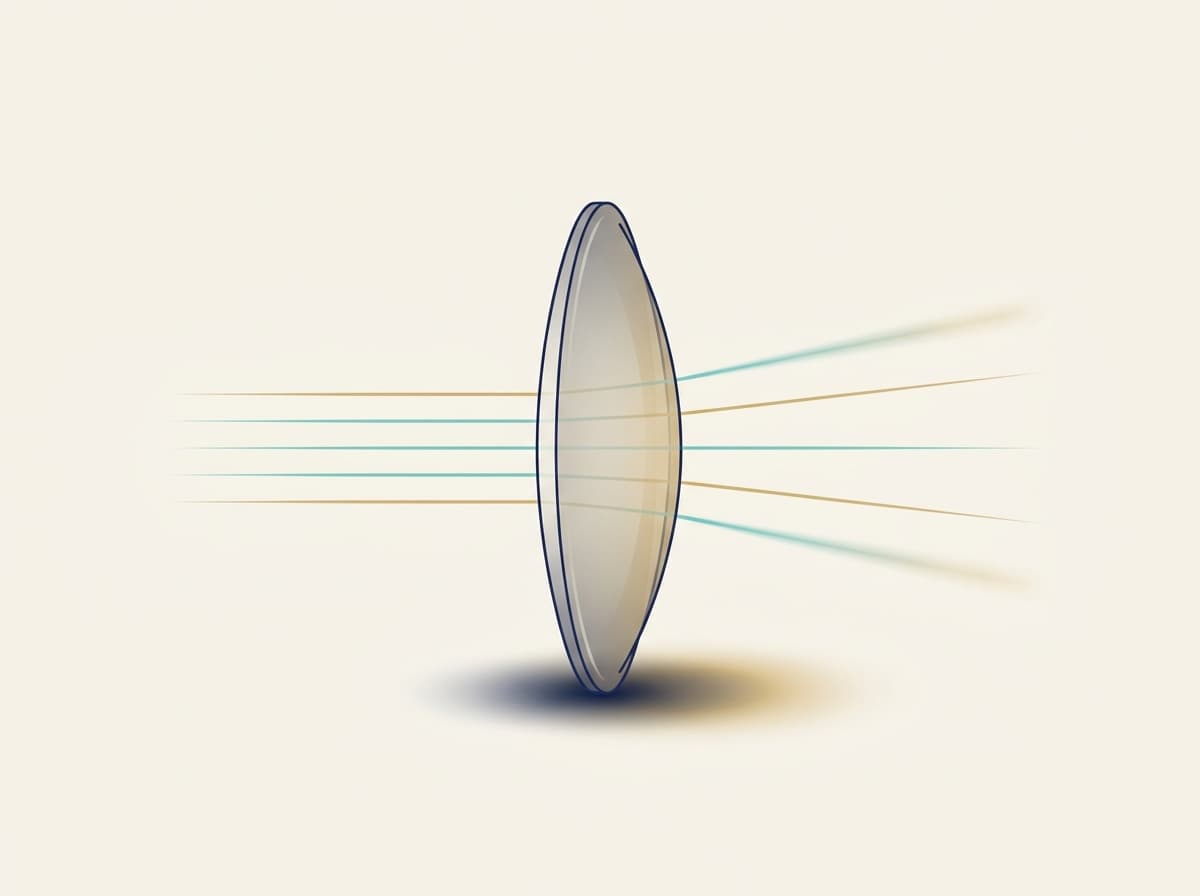
Stiff and flattened with age. It can no longer flex to focus up close, so near print blurs and your arms get 'too short.' That's presbyopia.
Reading glasses and progressives only work around the stiff lens. RLE replaces it with a premium lens that focuses near, middle, and far, and can never form a cataract.
Choosing between procedures
RLE, LASIK, or cataract surgery: what's the difference?
Which part of the eye is changed?
LASIK reshapes your cornea, the clear surface at the front of your eye. Lens replacement and cataract surgery both replace the lens inside your eye.
What problem are we trying to address?
LASIK aims to reduce dependence on glasses or contacts by reshaping the cornea. Elective lens replacement also aims to reduce that dependence. Cataract surgery primarily addresses a lens that has clouded.
How will the doctor decide whether it suits my eyes?
Your prescription, eye health and examination findings help the doctor assess whether any of these procedures is appropriate for you.
The right comparison starts with an examination, not an age alone.
Choosing your lens
The lens decides your result. Here’s the trade-off, and the part no one shows you.
A general guide to glasses-free vision at each distance. Your surgeon matches the lens to your eyes and how you use them, individual results vary.
Reading
a book, a phone
Screens
computer, dashboard
Distance
driving, across a room
Monofocal
The insurance-default lens
Extended depth of focus
Clean distance & computer, fewer night halos
Trifocal
The widest glasses-free range
Monofocal
The insurance-default lens
Extended depth of focus
Clean distance & computer, fewer night halos
Trifocal
The widest glasses-free range
And what those lenses can look like at night:

What some premium lenses can do at night, especially in the first months, soft halos and starbursts around lights.

What most people settle into as the brain neuroadapts, and what extended-depth lenses favor from the start.
We’ll show you exactly this in VR before you choose a lens, and we factor in how much you drive at night.
Watch
RLE, explained by the team.
A short walkthrough from Texas Vision so you know what to expect before your consultation.
Questions patients actually ask
The surgery is essentially identical: we remove the natural lens and replace it with a premium IOL. The difference is timing: RLE is done electively before a cataract forms, while cataract surgery is done once the natural lens has clouded. Either way, you never develop cataracts afterward.
The goal of a premium multifocal or extended-depth lens is to make you far less dependent on glasses across distance, computer, and reading. 'Far less dependent' is an honest promise; 'never again, in every condition' is not. We calibrate the lens choice to your priorities and tell you the trade-offs up front.
Some premium lenses can cause halos or starbursts around lights at night, especially in the first months. Most people neuroadapt and stop noticing. We'll show you what each lens looks like at night in VR and account for how much you drive when we recommend one.
For many people, yes. You solve presbyopia and remove a future cataract surgery in one step. Whether it's right for you depends on your eye health, prescription, and how you use your vision. That's the entire purpose of the consultation.
The first step isn't surgery. It's a straight answer.
Book a consultation and start with a real exam. We'll tell you which procedure fits, what it costs, and whether it's right for you at all.